
Saw these and immediately pictured my photo on one, Elliot’s on one and one for Amos.

Saw these and immediately pictured my photo on one, Elliot’s on one and one for Amos.
I have a love hate relationship with Gillette… I’ve been a faithful consumer since they sent me a razor kit on my 18th birthday… but I’ve been the victim of a razorblade arms race against Schick and therefore have to drop 40 or so bucks every time i need to snag refills.
I’m seriously thinking about giving Harry a shot and hopefully circumventing the only options we seem to have.

This is the clubhouse leader in : Gift I would like most to get for my B.Day

Had the privilege of attending a Black Tie (& Sneakers?) event this past weekend @ the AT&T Center. The event was Dinner/Auction known locally as “Silver & Black GiveBack”. A San Antonio Spurs community program that helps the city in numerous ways.

Despite my best efforts to arrive fashionably late, I managed to arrive before a number of my co-workers.
Registration was surprisingly painless and received word that I would be seating at “Table #2”. Greeters asked attendees to walk into the AT&T center court.
As you walk down into the stadium - Hundreds of ushers lined the bleacher stairs in Referee outfits… it kinda felt like you had died and were going into Foot Locker Heaven.
The place (the floor) was filled with people stiffs/minorcelebs/athletes/free-loaders like myself. It was practically impossible to find your table… so I found one of the open bars,tipped heavily on my first visit and asked the bar keep to remember my face and keep my double crowns and diet coke flowing. He smiled and took too good a care of methroughout the evening.
As luck would have it… the fine people at Ashley HomeStores did me a solid and got us a table right next to the wing of the stage and 25 or so steps from the open bar I just mentioned.

The table was situated in a nice place to quickly get photos w/athletes & minor celebs because it was on the right wing of the stage: so almost every person of note had to hangout right behind me. If was wasn’t rocked out of my skull, I would have gone out of my way to take a photo with Michelle Beadle (former ESPN/NBC sports chick) who stood around for like 20 minutes unbothered because no one knew who she was.
Want to quickly say that all the Spurs were very approachable and there wasn’t really any handlers around so you could easily walk up to them. With the exception of Manu/Parker/Duncan… lines were relatively short to get photos with the Spurs.
The Tony Parker diss…
So I may have pissed off Tony Parker. OK. The layout of the floor is pretty simple… imagine a basketball court filled with tables. Along the Away Court sideline was a table that stretched the entire court with THOUSANDS of signed items (Basket Balls/Jerseys/Photos/Artwork/Shoes/etc.) that you could place silent bids on thru Android tablets they provided everyone.

So in the middle of said item table : was a little space (mid court) where people were asked to climb 60 or so steps to hit up the restrooms.
If the climb up 60 steps didn’t suck enough… you had to push your way through throngs of attendees who were gawking at sports memorabila.
Tony Fucking Parker decided to make himself available at said space to go up to visit the bathroom. I didn’t know this as I made my way through the throngs and as soon as I got to opening an usher asked me to go behind 30 people to take a photo with Parker. I naturally said ”Fuck Tony Parker, I want to go to the bathroom” (well within his 6’2” earshot) and the user allowed me to go right by him up the stairs. A few people laughed pretty hard… not Tony Parker and the night went on.
The Food:
There were three courses of food… The first dish was a lobster salad served in a martini glass. Tasty, but it didn’t pair nicely to the 3rd double crown n’ diet coke I was having.

The Second Course was served in the dark, during the auction. I didn’t get a picture but it was a very tender stake of some kind with a Chili Relleno. A very strange pairing… I had a good portion of my steak because it went well with my drink.
The 3rd and final course : Chocolate Cake/Orange Sherbet/Hardened chocolate that was covered in Silver Flake edible glitter. It was plated in a way that it resembled sushi…

I tried to crack the silver chocolate with my spoon and it didn’t give. In my drunken state I decided to really give it a Thor like whack and the Silver Ball just laughed at me as it sat unfazed by my swing.
10:00 PM
- Bars turned to cash… I alerted the table that I would be having drinks at the OCHO till midnight before going to the Brooklynite. Had 2 coworkers actually meet me there. We talked and had a good time…
Had a friend take some footage of us at the Brooklynite:
Note:
I don’t know who the gal is in the video that Henry Captured. She thought Henry was taking a photo of her when he was just trying to get some footage of her. You can see me confused and on my phone…

Mad Men, April 7th.


Happy Birthday Douglas Adams…
The 10 Year Hoodie
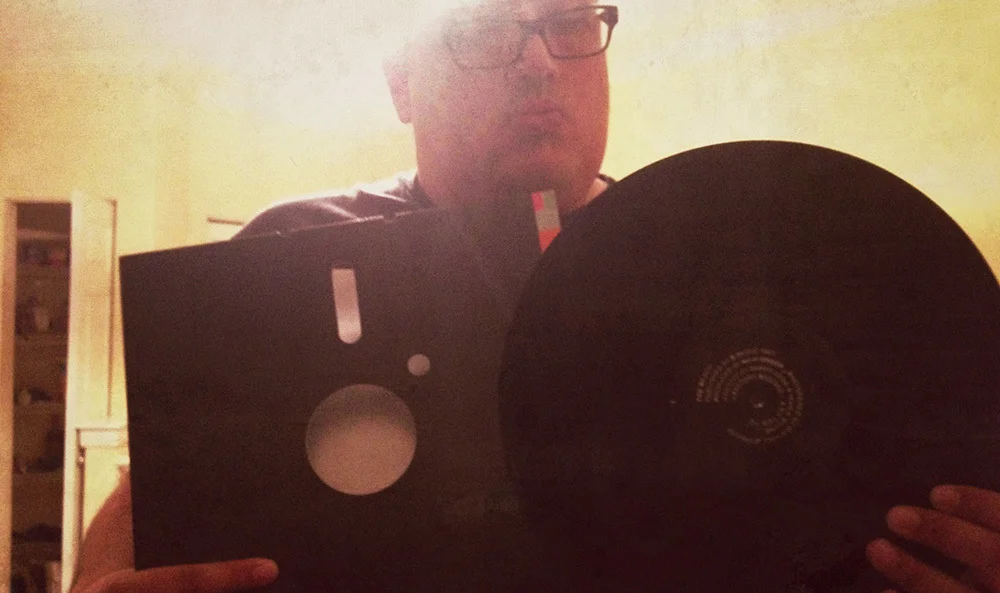
I just learned “Blue Monday”, by New Order turned 30 today. Spun my copy over dinner and recollected the many incredible memories I have associated with this track.

By Daniel Wallis
CARACAS | Tue Mar 5, 2013 5:52pm EST
(Reuters) - At two defining moments of his rule, Venezuela’s theatrical leader Hugo Chavez took a small silver crucifix from his pocket and held it above his head.
Both marked a quasi-religious “return” for the socialist ex-soldier whom supporters loved with messianic fervor - first from a 2002 coup that saw him jailed on a tiny Caribbean island, and then from cancer surgery inCuba in June 2011.
As he held aloft the crucifix from a balcony of his Miraflores Palace after returning from surgery, the maverick president of South America’s biggest oil exporter said he was putting his fate in the hands of God and the Virgin Mary.
"Today, the revolution is more alive than ever. I feel it, I live it, I touch it … If Christ is with us, who can be against us? If the people are with us, who can be against us?" he said, working his supporters into a frenzy.
"But no one should think my presence here means the battle is won. No," he cautioned, turning the screams of joy at his homecoming to tears at the fragile state of his health.
Chavez died in hospital on Tuesday, finally succumbing to the cancer after four operations in Cuba. His death ended 14 years of charismatic, volatile rule that turned him into a major world figure.
Ever the showman, Chavez would jump from theology to jokes, and from Marxist rhetoric to baseball metaphors in building an almost cult-like devotion among followers.
Throughout his presidency, he projected himself in religious, nationalistic and radical terms as Venezuela’s savior, and it largely worked. While his foes reviled him and portrayed him as a boorish dictator, Chavez was hailed by supporters as a champion of the poor and he won four presidential elections.
He took over from his mentor Fidel Castro as the leader of Latin America’s left-wing bloc and its loudest critic of the United States, winning friends and enemies alike with a cutting and dramatic frankness that no one could match.
When the cancer first struck, Chavez could have stepped aside to fight it.
Instead, he stretched his physical limits by staying at the front of his government while running a successful but hobbled campaign to win a new six-year term at an October 7 election.
RURAL ROOTS
Born the second of six sons of teachers in the cattle-ranching plains of Barinas state and raised by his grandmother Rosa Ines in a mud-floor shack, the young Chavez first aspired to be a painter or pitcher in the U.S. Major Leagues.
Attracted by the chance to play baseball, he joined the army at 16 and was eventually promoted to lieutenant-colonel.
Though mixing with left-wing rebels and plotting within the military from long before, Chavez burst onto the national stage when he led a 1992 coup attempt against then leader Carlos Andres Perez.
The coup failed and Chavez surrendered, but he cut a dashing figure dressed in green fatigues and a red beret for a famous speech live on TV before being carted off to jail.
His comment that the coup had failed “por ahora” (“for now”) electrified many Venezuelans, especially the poor, who admired Chavez for standing up to a government they felt was increasingly corrupt and cold to their needs.
The hint of more to come, plus the unashamed acceptance of responsibility by Chavez, made him a hero in some sectors.
"I thank you for your loyalty, your valor, your exuberance, and I, before the country and before you all, assume responsibility for this Bolivarian militant movement," he said, instructing his fellow rebels to lay down their arms.
Pardoned in 1994 by Venezuela’s next president, Rafael Caldera, Chavez left jail and began a grassroots political campaign, eventually defeating a former Miss Universe to win a presidential election four years later.
By doing so, the former paratrooper ended the grip of Venezuela’s traditional parties and launched his self-proclaimed “Bolivarian Revolution” - named for Venezuela’s 19th century independence hero Simon Bolivar.
Chavez changed the nation’s name to the “Bolivarian Republic of Venezuela" and appeared in front of huge paintings of Bolivar, sending a subliminal message to Venezuelans that he was the modern reincarnation of their historical idol.
SLUM HERO
In the early days of his rule, Chavez enjoyed runaway popularity levels of 80 percent or more, especially in the sprawling slums of the capital Caracas.
His first big test surfaced three years in when he faced huge street protests and a buildup of withering criticism from political foes, business and labor leaders, Catholic bishops and even dissident soldiers.
But when military officers briefly pushed him out in their own coup in 2002, Chavez proved himself to be a survivor and bounced back to power after two days incommunicado and under arrest, some of it at an island military base.
In what he frequently refers to as his darkest moment - matched only by the cancer diagnosis he said his friend and ally Fidel Castro broke to him in 2011 at a private Havana hospital - Chavez thought he was going to be assassinated.
In an incredible 72 hours for Venezuela, a counter-coup by loyalist troops and demonstrations by hundreds of thousands of outraged “Chavista” supporters forced Pedro Carmona, who had briefly seized power, to resign and restored Chavez to the presidency.
That led to his first “crucifix moment”.
The stocky, wiry-haired Chavez - whose favorite attire remained the paratrooper’s red beret and dark green uniform or a bright red shirt - became Latin America’s most colorful and controversial leader.
He soon became a household name from Middle America to the Middle East.
CALLED “MUSSOLINI, CASTRO”
Allies say Chavez was misunderstood abroad, the victim of an unstinting U.S.-led propaganda campaign.
"They’ve called me a Mussolini or Fidel Castro or said I sleep with a book by Hitler for a pillow," Chavez once said. "But the people know the truth. They know who I really am."
He combined traditional left-wing tenets of equality and wealth distribution with a fervent nationalism inspired by Bolivar.
His critics regularly accused him and his government of being corrupt and inept, and of steering the country towards a Cuban-style authoritarian regime. Certainly, a clutch of opponents ended up in exile or jail, normally on graft charges they said were trumped up.
Business detractors said his socialist reforms, including the expropriation of rural estates and the nationalization of much of the economy, including multi-billion dollar oil projects, destroyed jobs and scared off investors.
A decade of high oil prices allowed Chavez to spend huge amounts on social programs that became the linchpin of his support among poor voters.
They included his famous slum “missions” that provided free healthcare and education, plus subsidized food, clothes and even electronics, and are likely to be his biggest legacy.
All of his political opponents have vowed to continue them, in some form or other.
Chavez defended his “revolution” as a long-overdue crusade to close the yawning gap between rich and poor in Venezuela, which combines huge oil and mineral wealth with grinding poverty, widespread unemployment and rampant crime.
His praise for communist Cuba and Fidel Castro, combined with his courting of other anti-U.S. states like Iran, irritated Washington, which has long been the main foreign buyer of Venezuelan oil.
Addressing the U.N. General Assembly in 2006 a day after then-U.S. President George Bush, he called Bush the “devil”, triggering shocked gasps and wry smiles around the hall.
"Yesterday the devil came here. Right here," Chavez said, crossing himself. "And it still smells of sulfur today."
In mid-2011 he was the only vocal supporter of Libya’s Muammar Gaddafi on the world stage, calling him a “beloved brother revolutionary” and condemning the NATO air strikes.
"Bombing the brave Libyan people to save them? What a brilliant strategy by the mad empire," he mocked. "Where are the international rights? This is like the caveman era."
He used similarly colorful language to condemn his domestic political opponents, calling them ruthless capitalist speculators, traitors and “los escualidos” - a squalid, bitter minority linked to the traditional political parties, which he said were venal and corrupt, that he defeated in 1998.
MARATHON TV SPEECHES
A garrulous public speaker, Chavez was perhaps best known for his famously rambling television broadcasts that mixed serious affairs of state with songs, folksy anecdotes, quirky behavior and other antics like bashing on his infant daughter’s xylophone.
His “Alo Presidente” (“Hello President”) program on Sundays routinely lasted eight or nine hours or more, exhausting weary cabinet ministers sitting alongside him, as well as journalists and others required to follow it.
Supporters hailed what they saw as his rare gift for communication - especially with Venezuela’s poor majority - and even detractors conceded that he displayed an uncanny charisma. Others said his aggressive leadership style was confrontational and counterproductive.
Towards the end of his rule, his illness made him more philosophical. Chavez said he had ignored his doctors at his peril and he quoted the German philosopher Friedrich Nietzsche, while also invoking the “spirits” of the plains of his youth.
At times, he sounded much more conciliatory towards his political foes; at others he remained defiantly scathing.
And he never lost his flair for the theatrical. When a U.S. newspaper quoted unnamed sources in September 2011 saying he had been rushed to a military hospital with kidney failure after a fourth session of chemotherapy - prompting speculation around the world that he was at death’s door - he summoned the foreign press corps to Miraflores the following morning.
He emerged wearing a tracksuit, cap and catcher’s mitt, and tossed a baseball back and forth with aides while cracking jokes with several sportswear-clad ministers.
Next, he stood unaided on the palace steps and took questions for more than an hour, chuckling as he read aloud from the Miami-based newspaper’s report and holding forth on world politics, the war in Libya, the failings of the international media and the scourge of global capitalism.
"I’m fine. Those who don’t love me and wish me ill, well bad luck!" he said.
(Editing by Andrew Cawthorne, Kieran Murray and Claudia Parsons)